

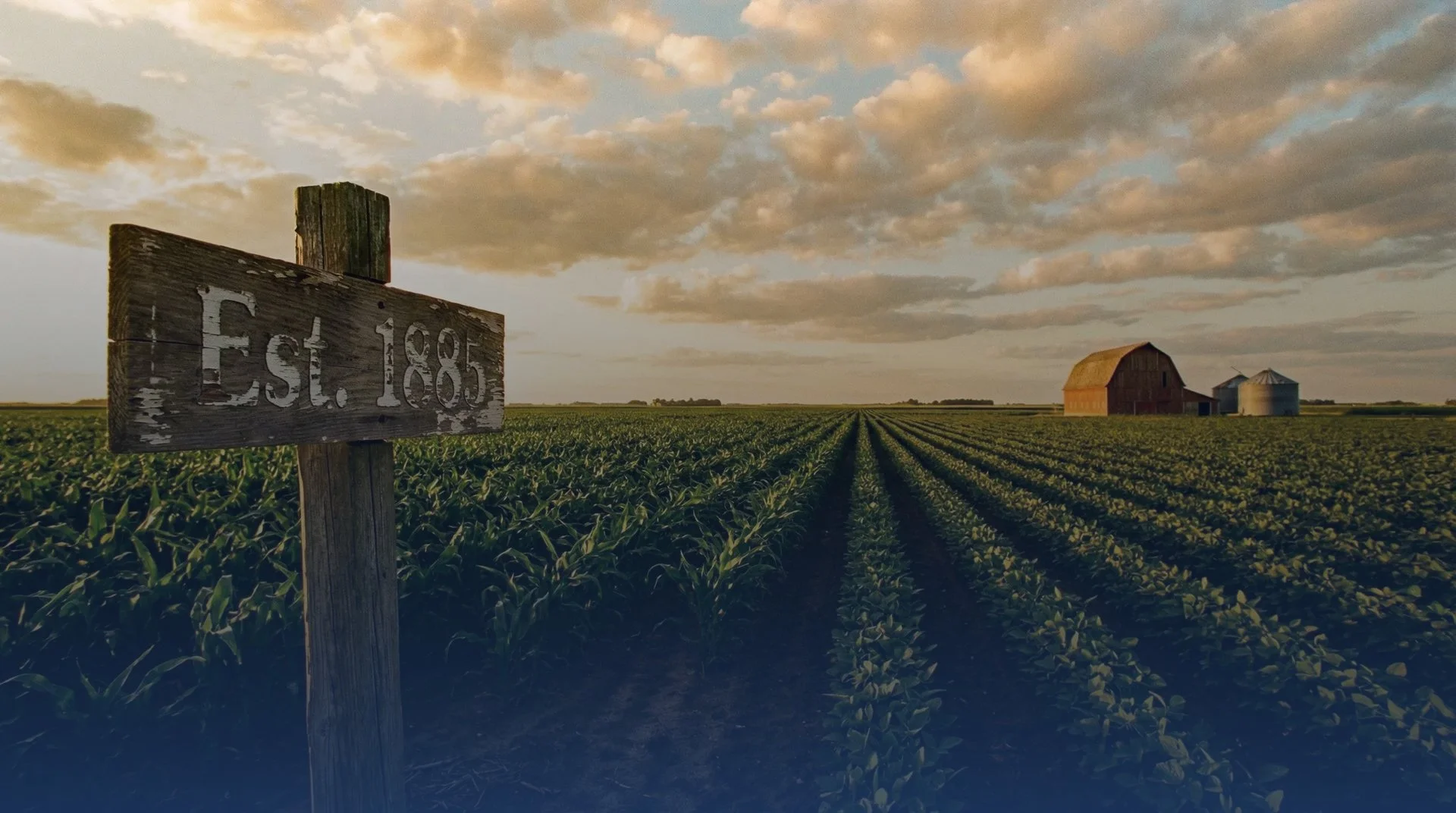
Sustainable Farming.
Impact Focused.
Strategic Investments.
We believe the most compelling opportunity in American agriculture is also its most urgent environmental imperative — transitioning conventional farmland to Certified Organic and Regenerative.
OUR PURPOSE
"Organic farming doesn't just produce pesticide free food — it can rebuild soil, sequester carbon, improve biodiversity, and sustain rural communities. We invest in that transformation."
THE BUSINESS CASE
A Higher-Better Use: Impact and Successful Business Outcomes Are Not a Trade-Off
Organic crops have historically commanded meaningful premiums over conventional equivalents, supported by a persistent supply-demand imbalance as domestic demand has outpaced supply. CFAM seeks to capture this structural dynamic while delivering measurable environmental and social outcomes.
01
Strategic Acquisition
We focus on row crop farmland across most of the Midwest, where water access, crop diversity, and undervalued land create ideal conditions for organic conversion at scale.
02
Value Creation Through Conversion
Organic transition can unlock land value and crop price premiums.
03
Disciplined Portfolio Management
With $232M+ invested across 35,000+ acres and 19 operating partners, CFAM has developed a repeatable process for farmland acquisition, organic conversion and portfolio management.
RURAL COMMUNITIES & FAMILY FARMS
People
We partner with Family Farms, offering long-term leases, transition support, and premium organic market access. Our program seeks to supports the next generation of American agriculture including the younger generation, new farmers, women and minorities.

ENVIRONMENTAL STEWARDSHIP
Planet
Every acre converted to organic can remove synthetic inputs from the ecosystem, sequesters carbon in the soil, and improves biodiversity. Our farms are measured for progress on soil health & carbon, GHG emissions, and minimized or eliminated synthetic inputs.

COMPELLING CHARACTERISTICS
Returns
Organic farmland has historically exhibited characteristics including income generation, inflation sensitivity, and low correlation to public markets, supported by organic crop price premiums.

Impact You Can Measure
19
FAMILY FARMPARTNERS
OPERATING PARTNERS
TBD
LBS PESTICIDES AVOIDED
VS. CONVENTIONAL BASELINE
TBD
LBS SYNTHETIC NITROGEN AVOIDED
VS. CONVENTIONAL BASELINE
TBD+
ACRES IN COVER CROPS
ACTIVE COVER CROP PROGRAM
TBD
ACRES IN NATURAL HABITAT
POLLINATOR & BUFFER STRIPS
TBD
GALLONS WATER PROTECTED
FROM CHEMICAL RUNOFF
WHY ORGANIC MATTERS
The Environmental Case for Organic Conversion
Conventional farming accounts for roughly 10% of U.S. greenhouse gas emissions, depletes topsoil at 10x its natural regeneration rate, and introduces billions of pounds of synthetic chemicals into our waterways annually. Organic conversion can help to reverse each of these trends — measurably and verifiably.
Soil Carbon Sequestration
Organic practices help rebuild soil organic matter, locking carbon below ground and improving long-term fertility.

Water Quality & Efficiency
Building Soil Health contributes to water saving & efficiency. Eliminating synthetic inputs reduces nitrate runoff, protecting rivers, aquifers, and downstream communities.

Biodiversity & Ecosystem Health
Cover crops, diverse crop rotations can support pollinators, restore habitat, and build natural pest resistance.

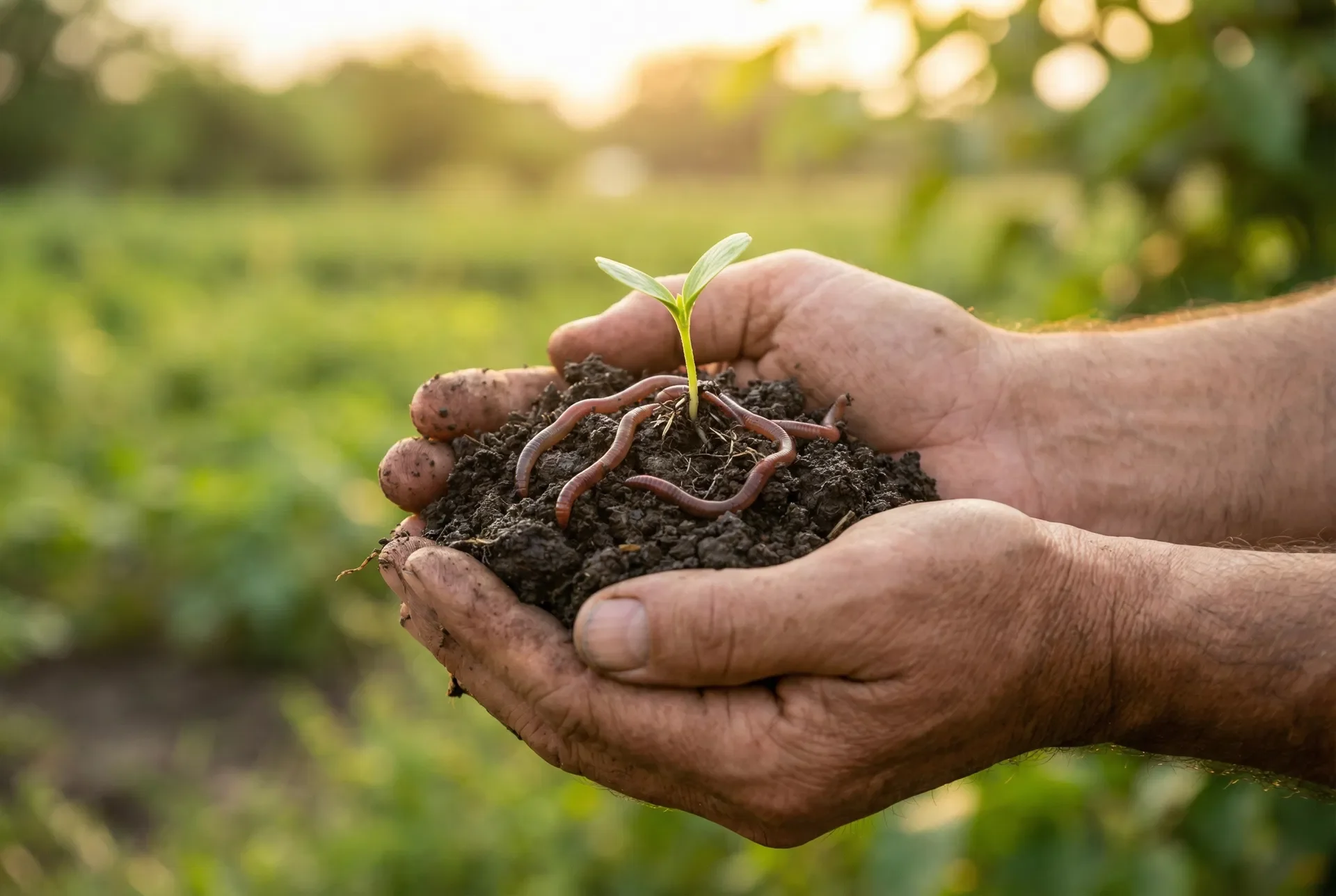
THE ORGANIC DIFFERENCE
Healthy soil is the foundation of food quality, water purity, climate resilience, and long-term land value.
PEOPLE & COMMUNITY
Supporting the Farmers Behind the Food
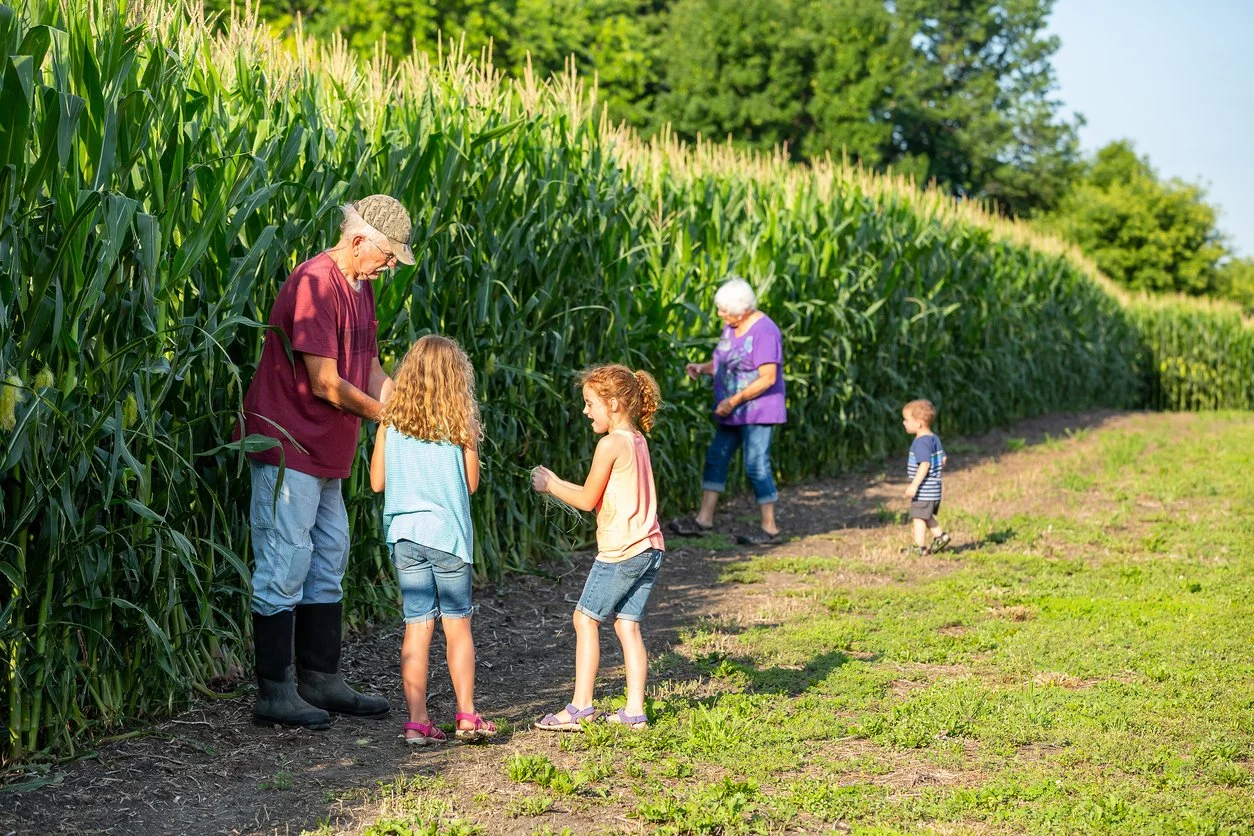
Behind every acre of organic farmland is a farming family making a long-term commitment to better practices. We provide the land, transition support, and market access that makes that commitment viable — and we measure our social impact as rigorously as our financial metrics.
19
Operating Farm Partners
70%
Farming Family Operators
30K+
Acres Under Management
3rd Gen
Average Farm Heritage
RESPONSIBLE INVESTMENT
Our approach is informed by and aligned with leading global ESG and impact standards.